Dubai Holding Real Estate brings together major property brands including Meraas, Nakheel and Dubai Properties, so buyers should not treat the wider group name as one uniform property proposition. International buyers should first identify the exact brand and project, understand the developer and master-developer roles, then compare the specific community, property stage, unit, current availability, recurring costs and credible alternatives before moving forward.
Dubai Holding Real Estate: How International Buyers Should Compare Brands, Projects and Units
Dubai Holding Real Estate is not a single-project developer proposition. Its current real-estate portfolio brings together major brands including Meraas, Nakheel and Dubai Properties, with communities and residential projects across different parts of Dubai.
That scale can be useful to buyers, but it also creates an important distinction: a property associated with Dubai Holding Real Estate still needs to be judged by the specific brand, project, developer role, exact unit and transaction terms attached to the opportunity.
For an international buyer, the practical question is not whether “Dubai Holding” is attractive in general. It is whether the exact property under one of its real-estate brands fits the buyer’s location needs, budget, property type, project stage and ownership plan.
Use Dubai Holding Real Estate as the group-level context. Make the purchase decision at brand, project and exact-unit level.
1. First Identify the Brand Behind the Property
Dubai Holding Real Estate currently presents a portfolio that includes Meraas, Nakheel and Dubai Properties.
Those brands are not interchangeable. They have different community portfolios, product types, project histories and market positions.
A buyer should therefore establish which brand is actually behind the property before comparing the offer with other opportunities.
2. Separate the Group Name From the Project-Level Developer Position
A large real-estate group can provide useful institutional context, but the group name should not replace project-level verification.
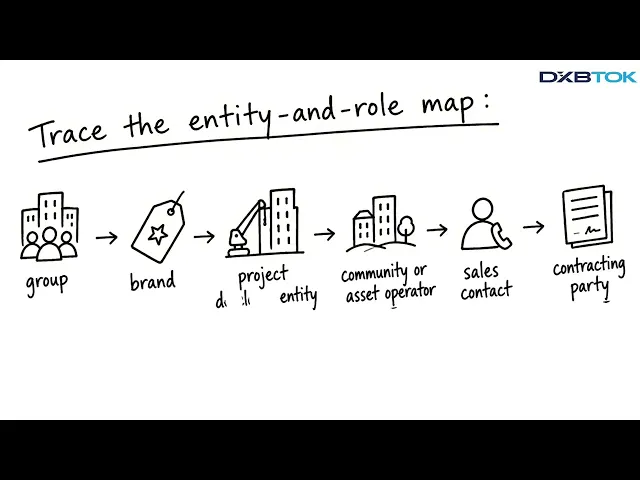
The relevant buyer questions still include which entity is developing or selling the specific project, what role the master developer plays, and what documents identify the property and project.
The Compare Dubai Developers guide provides the broader cross-developer framework for keeping group reputation separate from the exact opportunity.
3. Meraas Opportunities Need a Meraas-Specific Review
Meraas is currently presented by Dubai Holding Real Estate as a design-led developer with projects and destinations including City Walk and Bluewaters, alongside newer residential development.
If the property is a Meraas opportunity, compare the exact community, project, unit, availability, project stage and ownership practicality rather than relying on the Dubai Holding umbrella alone.
The Meraas Dubai Property guide covers that developer-specific decision in more depth.
4. Nakheel Opportunities Need a Different Comparison
Nakheel is the master developer behind major waterfront and urban communities, including Palm Jumeirah and other large-scale destinations.
A Nakheel property can involve a very different buyer decision from a Meraas property because community scale, property type, development stage and waterfront exposure can differ substantially.
The Nakheel Dubai Property guide provides the more specific community, project and unit comparison for Nakheel opportunities.
5. Dubai Properties Should Also Be Treated as Its Own Brand Layer
Dubai Holding Real Estate’s current portfolio also includes Dubai Properties projects and communities.
That means a buyer should avoid using the Dubai Holding name as a substitute for understanding the specific project brand and community.
The relevant property may sit in a very different location and product category from a Meraas or Nakheel opportunity, even though all sit within the same wider group context.
6. Compare the Exact Community Before Comparing the Unit
Dubai Holding Real Estate’s wider portfolio spans waterfront locations, urban mixed-use districts, villa communities and established residential areas.
Community fit can therefore matter more than the group name.
Compare access, lifestyle environment, property type, surrounding development, community maturity and the buyer’s intended use before moving to the exact apartment, villa or townhouse.
7. Then Test the Specific Project
Once the brand and community are clear, the exact project should earn its place on the shortlist independently.
Project registration, construction stage, specification, expected completion position, surrounding development and the evidence supporting the offer all matter.
The Dubai Project Verification guide explains the first project-level checks when a specific opportunity becomes serious.

8. Current Availability Must Be Confirmed at Unit Level
Large developer groups can have many active projects and units, but marketing pages do not prove that a particular apartment, villa, floor, layout, view or price remains available.
A serious comparison requires current evidence for the exact property being offered.
The Dubai Project Availability guide explains why buyers should confirm the actual unit before relying on a marketed option.
9. Group Scale Does Not Make Every Property Equally Strong
A large institutional real-estate platform can provide scale, but buyers should still distinguish stronger and weaker property fits within the portfolio.
Location, building or villa quality, layout, view, privacy, road access, recurring costs and project stage can all change the result.
The purchase should make sense because of the exact property, not because the group is large.
10. Compare Master-Developer and Project-Developer Responsibilities
Some properties sit inside large master-planned communities where the master developer shapes roads, infrastructure, public realm and community development, while a project-level developer may be responsible for the individual building or phase.
Understanding that distinction can help buyers interpret who is responsible for the wider destination and who is responsible for the exact project.
This becomes especially important where a community contains several different residential products or development partners.
11. Track Record Should Be Relevant to the Property Being Considered
Dubai Holding Real Estate’s portfolio is broad enough that group-level delivery history can be too general to answer a buyer’s question.
Look for evidence that is relevant to the same brand, property type, project scale and community context.
A waterfront apartment, villa community and mixed-use urban residence should not be treated as identical delivery challenges simply because they sit under one wider real-estate group.
12. Ready and Off-Plan Properties Require Different Evidence
A completed property can be judged through its actual building, community, condition and operating environment.
An off-plan property depends more heavily on documents, specification, construction progress, payment obligations and future delivery.
Buyers should therefore adjust the evidence standard to the stage of the exact property rather than treating all Dubai Holding Real Estate opportunities in the same way.
13. Compare the Exact Unit Against Alternatives Outside the Group
A property under Dubai Holding Real Estate should not be compared only with other properties in the same portfolio.
Once the buyer has defined budget, location, property type and intended use, compare the shortlisted property with credible alternatives from other developers.
This helps determine whether the exact opportunity is genuinely competitive or simply benefits from a familiar group name.
14. Keep the Route to Purchase Separate From the Property Decision
A buyer may encounter a property through a developer sales team, a licensed broker or another authorised channel.
That route should not change the core property analysis.
The exact property, current terms, documents, payment destination and responsibilities should remain clear regardless of how the opportunity was introduced.
15. Remote Buyers Should Test Ownership Practicality
International buyers who will spend limited time in Dubai should consider how easily the exact property can be managed after purchase.
Handover coordination, building or community access, maintenance, furnishing, property management and recurring documentation can all affect the ownership experience.
A premium community is less useful if the exact property is unnecessarily difficult to own from abroad.
16. Do Not Treat Portfolio Prestige as a Return Guarantee
Recognisable communities and major developer brands can support buyer confidence, but they do not guarantee future rental performance or appreciation.
Review current evidence, exact-property quality, competing supply, recurring costs and the assumptions behind any commercial claim.
The property should still make sense under more conservative assumptions.
17. Know What Would Make You Reject the Property
A disciplined shortlist needs rejection criteria.
Examples may include unclear brand or developer responsibility, weak project evidence, unsuitable community fit, poor unit layout, difficult access, high recurring costs, unclear current availability or a price premium that is hard to justify against outside alternatives.
Rejecting a weak property is part of a strong buying process, even when the wider group is highly recognisable.
Final Takeaway
Dubai Holding Real Estate gives buyers access to a broad portfolio across brands such as Meraas, Nakheel and Dubai Properties, but the group name should not be treated as the final buying decision.
Identify the exact brand, community, project and developer role first. Then compare the specific unit, project stage, current availability, ownership practicality, recurring costs and credible alternatives before moving forward.
DXBTOK helps international buyers compare selected Dubai property opportunities with clearer information around developers, communities, projects, exact units, buyer costs and remote purchase practicalities before moving forward.
Related DXBTOK Guides
Dubai Master Developer vs Private Developer: What Buyers Should Know →
Buying Direct from Developer vs Through a Licensed Broker →
How to Verify a Dubai Property Developer →
Dubai Developer Track Record: What Buyers Should Review →
Full Cost of Buying Dubai Property: What International Buyers Should Budget →