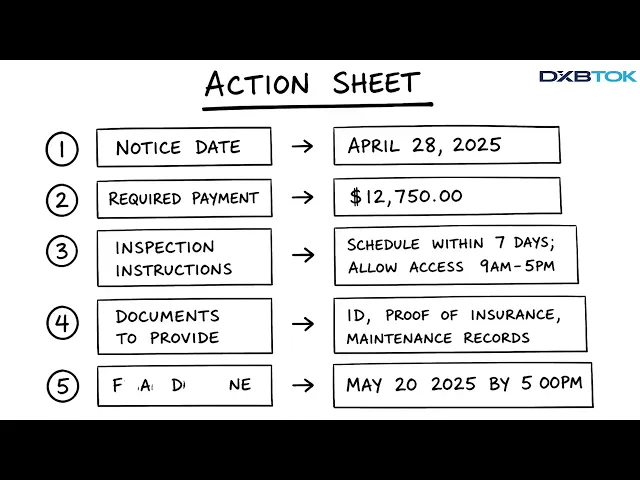
A Dubai handover notice can mark the point where an off-plan purchase begins moving from construction toward practical ownership. Buyers should not treat the notice as automatic proof that every contractual, financial or property-readiness issue has been resolved. Review what the notice refers to, whether it aligns with the current project position and SPA, what obligations may now become relevant and whether anything needs clarification before the ownership transition moves forward.
Dubai Handover Notice: What Off-Plan Buyers Should Check Before Acting
Receiving a handover notice is an important turning point in an off-plan purchase. It usually means the transaction is moving from the construction stage toward practical ownership, but the notice should not be treated as proof that every financial, contractual, inspection or ownership issue has already been resolved.
The buyer should understand what the notice means for the exact unit, what obligations may now become relevant and whether the notice is consistent with the contract, the current project position and the buyer’s own readiness.
For the broader steps that follow at this stage, see our Dubai property handover process guide. Here, the focus is on understanding the notice itself before acting.
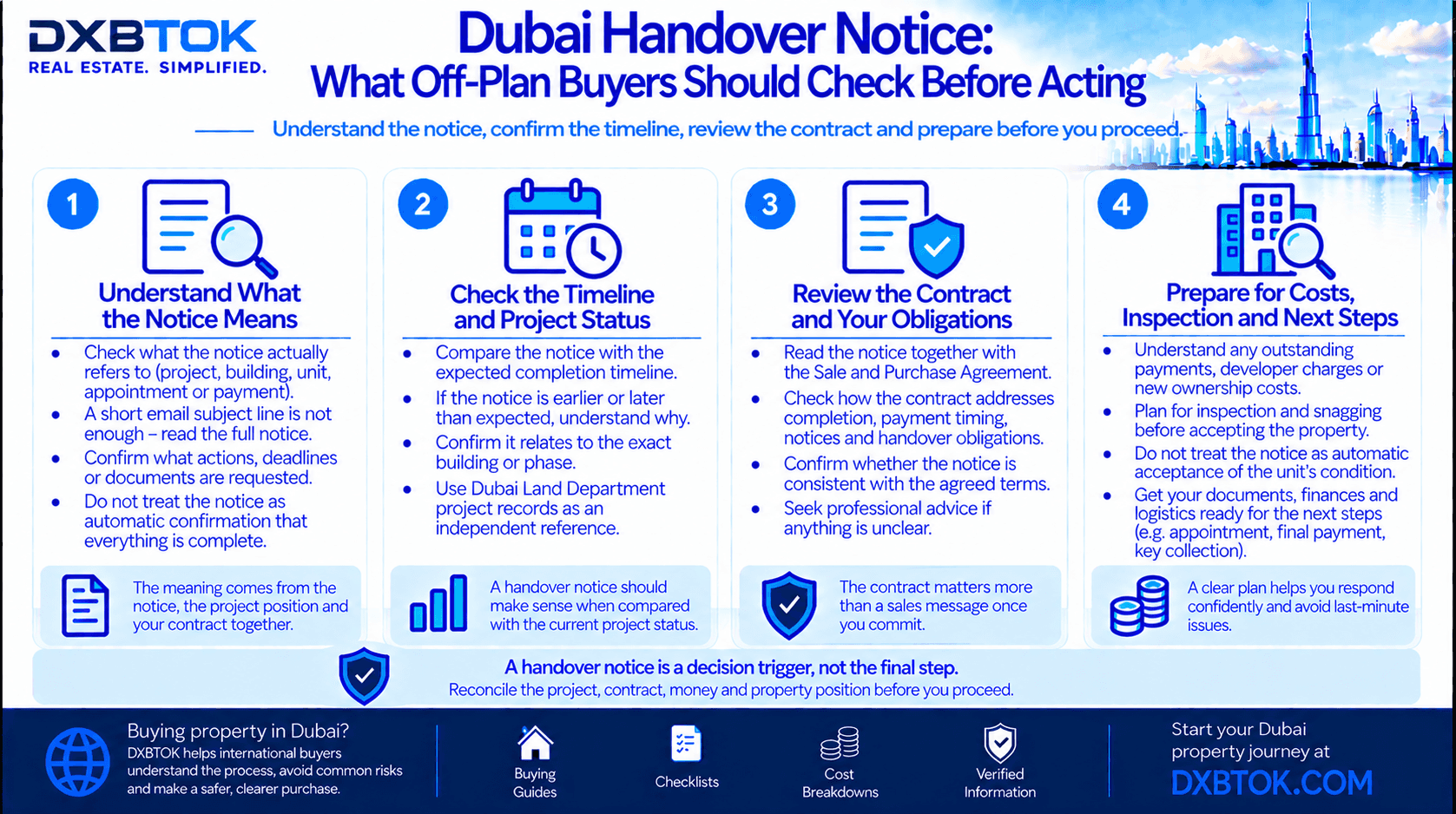
A handover notice is a decision trigger. It should prompt the buyer to reconcile the project, contract, money and property position before treating the unit as ready for final ownership transition.
1. Understand What the Notice Is Actually Telling You
A handover notice may communicate that the developer considers the property or project ready, or approaching readiness, for the next completion-stage actions.
What matters is the substance of the communication. Buyers should understand whether the notice refers to project completion, the exact building or phase, the individual unit, a handover appointment, an outstanding payment requirement or another completion-stage obligation.
A short email subject line saying “handover” does not answer all of those questions. The meaning comes from the actual notice, the project position and the transaction documents together.
2. Check Whether the Notice Matches the Current Timeline
A handover notice should make sense when compared with the timeline the buyer has been following.
If the project was expected to complete in a particular period, a notice arriving much earlier or later deserves context. The buyer should understand whether the timeline has changed, whether the notice relates to the exact building or phase and whether the unit is genuinely entering the completion stage.
The wider distinction between marketed dates, current project progress and actual readiness is explained in Dubai handover timelines for off-plan buyers.
Dubai Land Department records official project and completion information that can provide an independent reference point when a developer’s communication and the expected timeline do not appear to align.
3. Read the Notice Against the Contract, Not in Isolation
The notice should be read together with the Sale and Purchase Agreement and any later formal amendments or project communications.
Depending on the contract, the completion or handover stage may affect payment timing, buyer documents, inspection arrangements, notices, possession and other obligations. The buyer therefore needs to understand whether the notice is consistent with the agreed framework rather than assuming that every developer communication creates the same obligations in every transaction.
For a deeper review of the contractual obligations, see our Dubai off-plan contract terms guide.
4. Do Not Treat the Notice as Acceptance of the Property
A handover notice is not the same thing as the buyer confirming that the unit is physically satisfactory.
The property may still need to be inspected, compared with the agreed specification and reviewed for visible defects or incomplete items. The buyer should keep the communication about readiness separate from the later decision about whether the delivered unit matches what was expected.
This distinction matters because buyers can otherwise feel pressured to treat a completion-stage notice as automatic acceptance of the property’s condition.
5. Understand the Financial Consequences Before Committing
The handover stage can concentrate several financial obligations into a short period.
The buyer may still have a final purchase balance, genuinely outstanding transaction or developer charges, inspection costs, first ownership expenses or setup costs. A notice can therefore create a cash-flow issue even when the buyer has already paid most of the purchase price.
Keep those amounts separate and understand what is actually due for the exact transaction. The specialist breakdown is explained in Dubai handover costs.
6. Keep the Notice and the Property Inspection Separate
A handover notice and a property inspection answer different questions.
The notice tells the buyer that the transaction is moving into the completion stage. The inspection helps establish whether the delivered property appears complete and whether visible defects or incomplete items need attention before the ownership transition is treated as finished.
Keeping those two issues separate helps buyers avoid treating a developer’s readiness notice as proof that the unit itself has already been checked and accepted.
7. Check Whether the Unit Is Practically Ready for Ownership
Practical readiness is broader than receiving one document.
A newly completed property can still require attention around access, utilities, building operations, delivered specification, first ownership costs and the owner’s intended use. Those issues matter particularly when the buyer plans to move in, rent the unit or manage it from abroad soon after handover.
The wider first-occupancy readiness questions are explained in New-Build Dubai Property: What to Check.
8. Overseas Buyers Need to Think About Timing and Representation
International buyers may receive a handover notice while they are outside the UAE.
That can create practical questions around travel, inspection, signing, access, payment timing and who is authorised to coordinate locally. The right structure depends on the transaction and the buyer’s circumstances, so remote ownership should be planned before a short deadline creates unnecessary pressure.
Buyers should identify which responsibilities require personal attention, local coordination or professional support before the handover deadline approaches.
9. Watch for Inconsistencies Before Acting
A handover notice deserves closer review when something material does not fit.
Examples include a notice that appears inconsistent with the latest project position, a payment demand that does not appear to match the agreed structure, a different unit or phase reference, unclear completion wording or a major change from earlier formal communications.
An inconsistency does not automatically mean the notice is invalid or the project has a serious problem. It means the buyer should clarify the position before making an irreversible payment, acceptance or ownership decision.
10. Keep the Communication Record Clear
Completion-stage communication can become important later, particularly when dates, payments, property condition or responsibilities are disputed.
Buyers should therefore keep the handover notice together with the SPA, payment record, relevant developer communications and any later clarification that materially changes the position.
A clear record helps show what the buyer was told, what was agreed and what happened next if a disagreement arises later.
11. Know When the Issue Has Become More Than a Normal Handover Question
Most handover notices are part of the ordinary transition into ownership. Some situations need a different level of review.
If the notice conflicts materially with the contract, the project has been seriously delayed, the buyer disputes a payment demand, the property is not ready as represented or the buyer is considering refusing handover or changing contractual performance, the issue may require qualified legal or professional advice.
At that point, the buyer may be dealing with a contract, delay, payment or dispute issue rather than a routine handover question.
12. Use the Notice to Decide What Needs Attention Next
The most useful questions are straightforward.
Is the communication consistent with the current project position? Does it match the contract? What financial obligations may now become relevant? Is the unit ready to move into inspection and practical ownership? Does anything require clarification or professional support before the buyer commits?
Once those points are clear, the buyer can move into the next stage with a better understanding of the responsibilities, risks and decisions involved.
Final Takeaway
A Dubai handover notice is important because it can mark the point where an off-plan purchase begins moving into completion and ownership.
But buyers should not treat the notice as a standalone instruction or automatic proof that the property, payment position and ownership transition are all complete.
Read it in context: the exact unit, current project position, SPA, outstanding financial obligations, physical readiness and the buyer’s own ability to complete the transition. If those pieces align, the notice becomes a useful confirmation that the transaction is moving forward. If they do not, clarify the position before acting.
DXBTOK helps international buyers review selected Dubai property opportunities with clearer information around project status, contracts, handover readiness, costs and the wider ownership transition before moving forward.
Related DXBTOK Guides
What Happens if a Dubai Off-Plan Project Is Delayed? →
What International Buyers Should Ask a Dubai Developer Sales Team →
Dubai Property Budget Checklist for Remote Buyers →