
Snagging gives buyers an important opportunity to understand the condition of a newly completed Dubai property before handover. The key is not simply producing a long defect list, but identifying which findings are cosmetic, which affect normal use, which may require specialist attention and what still needs to be resolved before the ownership transition moves forward.
Dubai Snagging Process Before Handover: From Defect Record to Rectification
Snagging gives a Dubai property buyer a structured way to deal with defects, incomplete work and material finishing issues identified around handover.
The important part is not simply finding imperfections. A useful snagging process turns each material finding into something that can be recorded, communicated, followed up and checked again before it is treated as resolved.
If a developer has already issued a handover notice, the notice and the physical condition of the property should still be considered separately. A completion-stage notice may trigger payments, appointments or other actions, but the exact unit should also be assessed on its own condition.
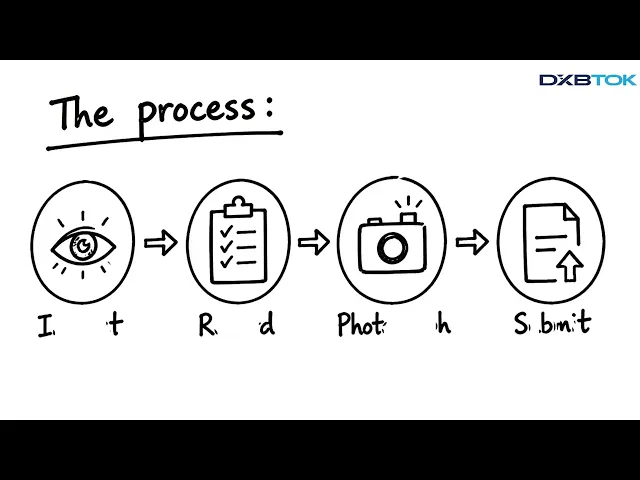
A strong snagging process follows the defect from identification to verified closure: understand the finding, record it clearly, establish what should happen next, track rectification and confirm that significant issues have actually been addressed.
1. Use the Agreed Property Specification as the Reference Point
Once an issue has been identified, the first question is what the buyer was reasonably entitled to expect from the delivered property.
Layout, finishes, fixtures, appliances, materials and other agreed features should make sense against the relevant transaction documents and property specification.
This helps separate a genuine delivery concern from a preference that was never part of the agreed property.
Where the issue concerns a material difference between what was contractually agreed and what appears to have been delivered, the Dubai off-plan contract terms guide provides the wider contractual context.
2. Classify Findings by Their Significance
Not every snag carries the same importance.
A small finishing imperfection can be very different from a finding that affects normal use, water tightness, cooling, electrical function, access, durability or the delivered specification.
The buyer should therefore avoid judging the situation only by the number of items on a snagging list.
A long list of minor cosmetic observations may be less significant than a much shorter list containing several material functional concerns.
This distinction helps determine which findings need the closest follow-up before handover progresses.
3. Record Material Findings Clearly
A defect is much easier to manage when there is a clear record of what was observed.
For material findings, the record should make it possible to understand:
what the issue is,
where it is located,
what evidence shows the problem,
and when it was identified.
Photographs, written descriptions and clear location references can help avoid later confusion between the buyer, developer, inspector or representative.
This becomes particularly important when the buyer is overseas and other people are coordinating the property handover on the buyer’s behalf.
4. Turn the Findings Into a Controlled Snag Record
Once material issues have been identified, they should be organised into a usable record rather than left as scattered photographs, messages or verbal comments.
The objective is to make each significant item traceable.
A buyer should be able to distinguish between:
items already acknowledged,
items awaiting clarification,
items expected to be rectified,
and items that may need further technical assessment.
This creates a cleaner basis for communication and later reinspection.
5. Understand the Developer’s Position on Each Material Item
Recording a snag is only one stage.
The buyer should also understand what the developer intends to do with the significant findings.
Some items may be accepted for rectification. Others may be disputed, considered minor or require additional review.
The important point is that material issues should not disappear into informal conversations without a clear understanding of what happens next.
Where something significant remains unresolved, a written record is generally more useful than relying only on verbal reassurance.
6. Keep Rectification Separate From Initial Identification
Finding a defect and correcting it are two different stages.
Once rectification has been agreed or undertaken, the buyer needs to know whether the specific issue has actually been addressed.
For minor items, this may be relatively straightforward.
For more significant findings, particularly those affecting function or normal use, the buyer may need stronger evidence that the problem has been corrected rather than simply marked as completed.
That distinction matters because the snagging process should continue until significant findings have a clear outcome.
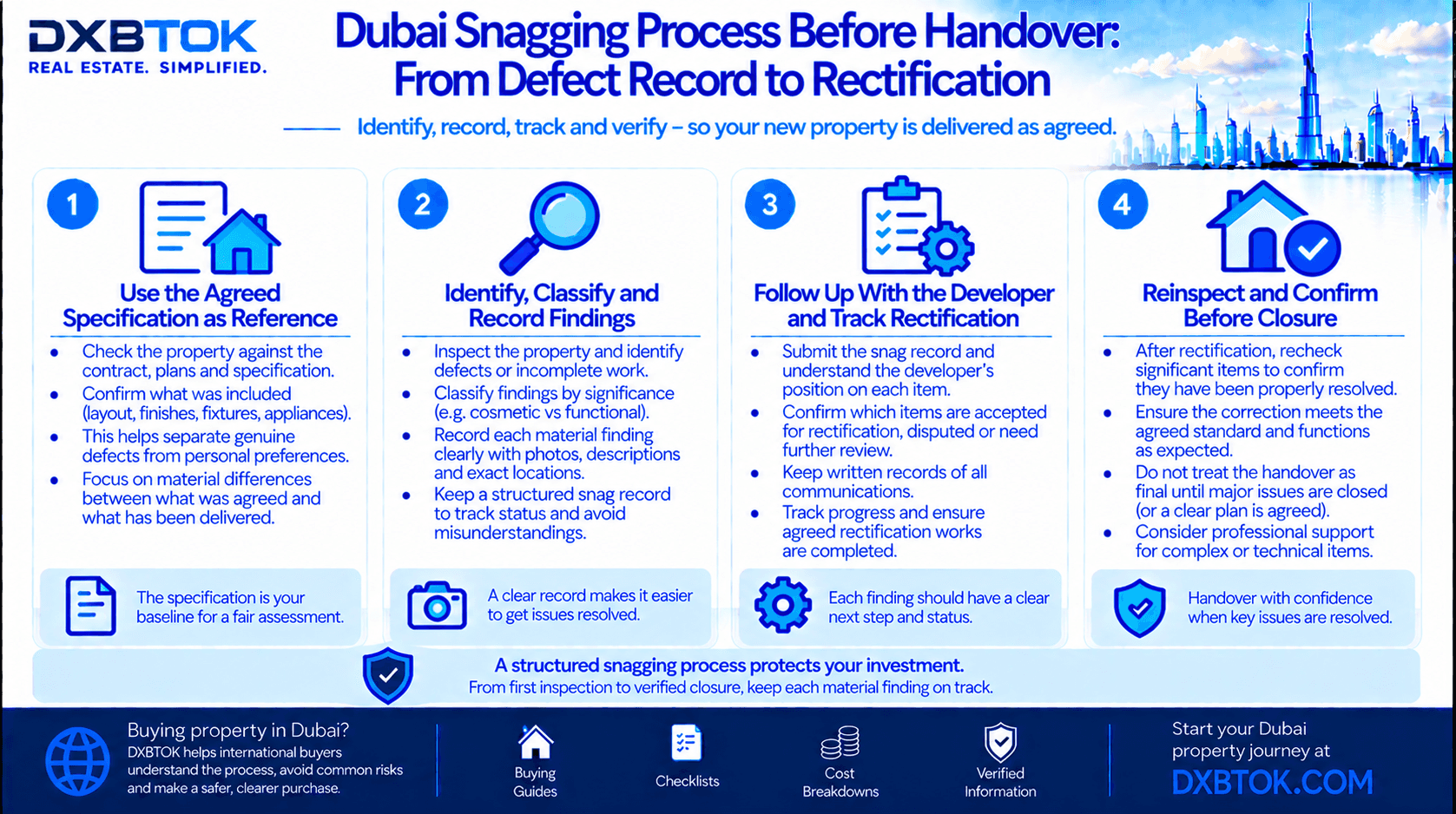
7. Reinspect Significant Items Before Treating Them as Closed
Where an important snag has been rectified, a follow-up check can confirm whether the original problem has actually been resolved.
This is particularly relevant when the finding affected practical use, water, cooling, electrical function, doors, windows, damaged finishes or another material part of the property.
Reinspection focuses on the significant items that were previously identified and expected to be corrected.
A snag should be treated as resolved because the underlying issue has been addressed, not simply because its status has been changed on a list.
8. Escalate Technical Questions When the Issue Is Not Clear
Some findings are difficult to assess without specialist knowledge.
Possible water ingress, significant cooling problems, electrical concerns, structural movement, major specification differences or repeated failures may require professional technical input.
Where the potential consequence is serious, the buyer should be cautious about relying only on an informal explanation.
Professional snagging or technical inspection support can be particularly useful when the buyer is overseas, the property is high value, the issue is technically complex or the buyer is not comfortable evaluating the developer’s response independently.
9. Keep Snagging Separate From the Wider Handover Process
Snagging is one part of the transition into ownership.
Payments, documents, access arrangements, key release, utilities and other completion-stage matters can be happening around the same time, but they are separate questions.
The Dubai property handover process explains the wider sequence around completion and possession.
For buyers assessing whether a newly completed property is practically ready for ownership and use, the broader New-Build Dubai Property guide covers the wider readiness questions beyond individual defects.
Keeping these issues separate helps the buyer avoid treating progress in one part of the handover as proof that every other part is complete.
10. Keep Handover Costs Separate From Defect Resolution
Handover can concentrate several financial commitments into the same period.
A remaining purchase balance, developer charges, initial ownership costs, furnishing or other setup expenses can create pressure to complete quickly.
That financial pressure should not determine whether a material defect has been properly understood or followed up.
The Dubai handover costs guide explains the cash requirements that can arise around the ownership transition.
The physical condition of the unit and the financial completion of the transaction should remain separate parts of the buyer’s decision-making.
11. Remote Buyers Need a Reliable Evidence Trail
For an overseas buyer, the snagging process often depends on representatives, inspectors or other local support.
That makes documentation more important.
The buyer should receive enough evidence to understand:
what material issues were identified,
what was communicated to the developer,
what was accepted for rectification,
what has been corrected,
and what remains unresolved.
A general message that the apartment “looks fine” provides much less control than a clear record showing how significant findings moved through the snagging process.
12. Do Not Assume the Snagging Appointment Eliminates Every Future Issue
A snagging inspection provides a condition check at a particular stage. It cannot guarantee that every possible issue will already be visible.
Some problems can become apparent only after systems are used or the property has been occupied for a period of time.
Buyers should therefore retain important property records, snagging evidence and developer communications after handover.
If a significant issue becomes apparent later, the relevant property documents, developer obligations and applicable legal or contractual protections should be reviewed rather than assuming that the original snagging appointment settled every possible future defect.
13. Know When the Snagging Process Is Actually Finished
The process should not be considered complete merely because an inspection took place or a defect list was sent.
For material findings, the buyer should be able to answer:
What was identified?
Was it recorded clearly?
What did the developer say would happen?
Was rectification carried out?
Was the significant item checked again where necessary?
Is anything important still unresolved?
When those questions are clear, the buyer has a much stronger basis for deciding whether the property’s physical condition is sufficiently understood for the handover to continue.
Final Takeaway
Dubai property snagging is most useful when it creates a controlled path from a material finding to a verified outcome.
The process starts with understanding the issue against the expected property specification, then recording it clearly, communicating it, tracking the developer’s response and checking significant rectification before the item is treated as closed.
The number of defects matters less than whether important findings are properly understood and followed through between inspection and handover.
A well-managed snagging process leaves the buyer with a clear picture of what was found, what has been corrected and what still requires attention before the ownership transition moves forward.
DXBTOK helps international buyers review selected Dubai property opportunities with clearer information around handover readiness, property condition, contracts, ownership costs and the wider purchase decision before moving forward.
Related DXBTOK Guides
Completed Dubai Property: What to Check Before Buying →
Dubai Handover Notice: What Off-Plan Buyers Should Check Before Acting →
Dubai Property Handover Process Explained →


