
A Dubai off-plan brochure can help buyers understand a future project, but its marketing presentation should not be confused with confirmed transaction information. This guide explains how to extract the project identity, masterplan, exact unit layout, specification, payment schedule and delivery references, how to recognise indicative or promotional material, and what should still be checked against current availability and formal purchase documents before reservation.
How to Read a Dubai Off-Plan Project Brochure
A Dubai off-plan brochure is designed to make a future project easy to imagine.
It can show architecture, interiors, amenities, views, landscaping, payment information and lifestyle scenes long before the finished property exists.
That makes the brochure useful — but only if you read it as a buyer rather than as a marketing presentation.
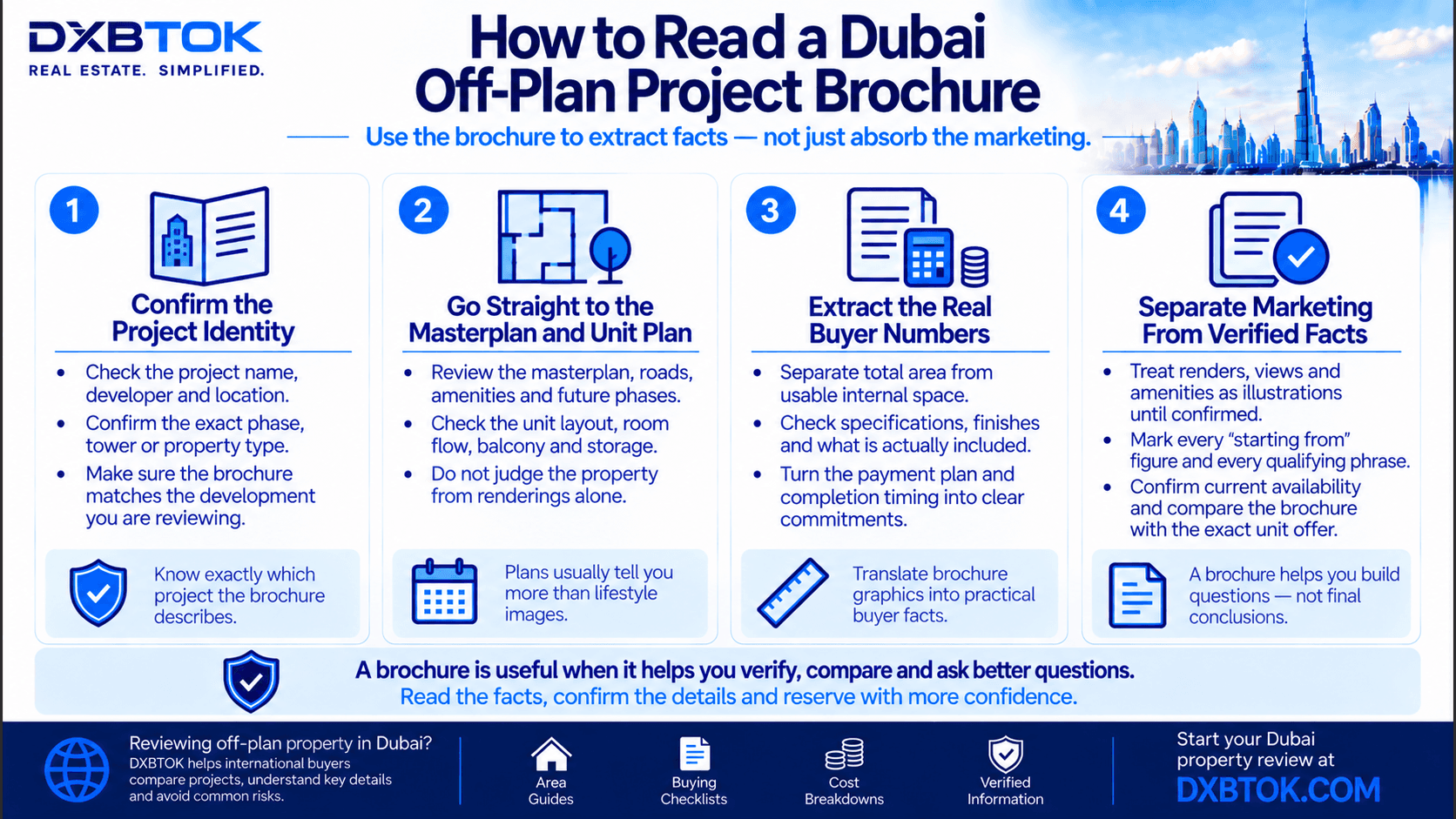
The goal is not to study every page equally. It is to extract the information that affects the purchase decision, identify what is only illustrative, and mark the points that still need confirmation before reservation.
1. Start With the Project Identity
Before looking at the lifestyle images, confirm exactly which project the brochure describes.
Check:
project name
developer
location
phase or tower where relevant
property types being offered
If a developer has several projects or phases with similar branding, make sure the brochure belongs to the exact development you are reviewing.
For a broader first-check process, use our guide on what to verify first when a Dubai project looks attractive.
2. Find the Masterplan Early
The masterplan can tell you more than a collection of exterior renders.
Look for:
building positions
roads and access points
parks and landscaped areas
retail or community facilities
waterfront or open-space relationships
future phases where shown
The masterplan helps you understand how the project is intended to function as a whole.
It can also help you identify questions about traffic, privacy, future construction or proximity to amenities.
3. Move Quickly to the Unit Plans
A polished interior rendering can create a strong impression, but the unit plan is normally more useful for comparing the property itself.
Check:
room dimensions where provided
bedroom placement
bathroom access
kitchen layout
storage
balcony or terrace position
circulation space
A unit can look spacious in a rendering and still have an inefficient floor plan.
4. Separate Total Area From Usable Interior Space
If the brochure gives an overall area, check what is included in that figure.
A large balcony or terrace can increase total area without increasing the interior living space by the same amount.
Compare:
internal area
balcony or terrace area
other external areas where relevant
This is especially important when comparing two units that appear similar by total size.
5. Treat Renderings as Illustrations Until Confirmed
Renderings are useful for understanding the intended design language.
They should not automatically be read as evidence of the exact final view, furniture, landscaping, surrounding skyline or delivered specification.
When a rendering strongly influences your decision, ask what specifically supports that impression.
Our guide to reading Dubai property marketing claims explains how to separate promotional presentation from information that needs stronger confirmation.
6. Check the Specification Pages
Look for pages describing what the property is intended to include.
That may cover:
flooring
kitchen finishes
appliances
bathroom finishes
wardrobes
smart-home features
furniture where relevant
Do not assume that every item visible in an interior image is included in the purchase.
If something matters to you, confirm whether it appears in the relevant specification or transaction documents.
7. Extract the Payment Schedule
If the brochure contains a payment plan, turn it into a simple sequence of actual cash commitments.
Record:
reservation or booking amount
down payment
instalment percentages
payment dates or construction milestones
handover amount
post-handover payments where applicable
A payment plan is easier to evaluate when converted from a marketing graphic into dates, percentages and amounts.
For the full mechanics, review our Dubai off-plan payment plans guide.
8. Look for Delivery and Completion References
Brochures often include a stated or expected completion period.
Record the exact wording used.
Then confirm how the relevant timing is described in the documents that govern the purchase.
Do not treat a brochure headline as a substitute for the delivery provisions in the transaction documents.
9. Do Not Assume the Brochure Shows Current Availability
A brochure describes the project, not necessarily the live inventory at the moment you are buying.
The unit type shown in the brochure may exist while the specific configuration, floor or view you want is no longer available.
Before choosing a property, confirm the current unit separately.
Our Dubai project availability guide explains why current availability should be checked independently.
10. Mark Every “From” or “Starting From” Figure
Brochures may show entry prices, starting prices or indicative commercial information.
Those numbers should trigger a question rather than a conclusion.
Ask:
which unit the figure applies to
whether that unit is still available
whether the figure includes all relevant charges
how the exact unit you want is priced
The brochure price is not a substitute for a current exact-unit offer.
11. Read Amenity Pages as a Checklist
Instead of simply admiring the amenity visuals, extract the facilities that matter to your buying decision.
For example:
pool
gym
children’s areas
resident lounges
coworking spaces
retail
beach or waterfront access
parking
Then confirm which facilities belong to the specific project, phase or building you are considering.
12. Pay Attention to Qualifying Language
Small wording can materially change how a brochure statement should be understood.
Watch for phrases such as:
indicative
artist impression
subject to change
proposed
approximately
expected
These words do not automatically make the brochure unreliable. They tell you that the statement should not be treated as a fixed commitment without further confirmation.
13. Compare the Brochure With the Exact Unit Offer
Once you receive a live unit option, compare it back to the brochure.
Confirm:
unit type
layout
size
floor
orientation
view description
price
payment schedule
This is where a general project presentation becomes an actual purchase opportunity.
14. Keep Brochure Information Separate From Contractual Information
A brochure can help you understand the project.
The purchase documents govern the transaction.
If a feature, specification, timing point or commercial promise is important to your decision, check how it appears in the relevant formal documentation before relying on it.
For buyers reaching the contract stage, our Dubai SPA guide explains what buyers should review before signing.
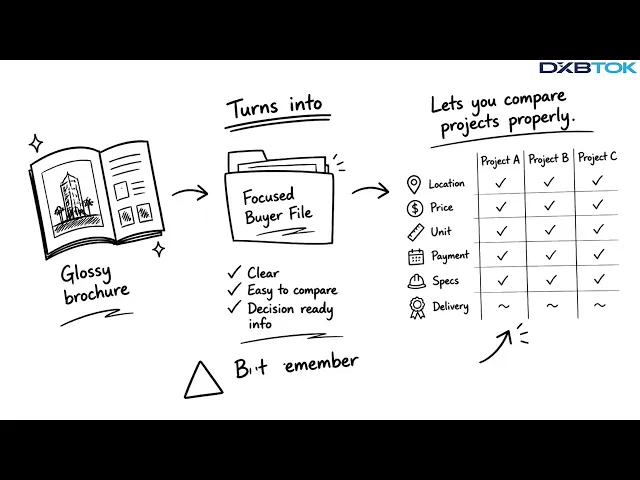
15. Use the Brochure to Build a Short Buyer File
A practical way to use a large brochure is to extract only the pages that affect the decision.
Your shortlist can include:
Project page: exact development and developer.
Masterplan: position within the development.
Unit plan: exact layout being considered.
Specification: what is intended to be delivered.
Payment schedule: actual buyer cash commitments.
Completion reference: stated delivery timing.
Amenity page: facilities relevant to you.
Open questions: every claim that still needs confirmation.
This turns a glossy marketing document into a practical comparison tool.
Final Takeaway
A Dubai off-plan project brochure is useful when you use it to extract information rather than simply absorb the presentation.
Focus on the project identity, masterplan, exact unit plan, specification, payment schedule and delivery references. Treat renders, lifestyle scenes and headline claims as points to investigate rather than automatic commitments.
The brochure should help you build your questions. It should not answer every buying question by itself.
Need help reviewing an off-plan project before reserving? DXBTOK can help international buyers compare selected Dubai property opportunities and organise the key information that still needs confirmation.
Start your Dubai property review at DXBTOK.com.
Related DXBTOK guides
When a Dubai Project Looks Attractive: What to Verify First →
How to Read Dubai Property Marketing Claims →
Dubai Off-Plan Payment Plans Explained for Remote Buyers →
Dubai Project Availability: Why Confirmation Matters →
Dubai SPA Explained: What Buyers Should Review Before Signing →


