Dubai Sea-View Property: How Buyers Should Verify the View Before Paying a Premium


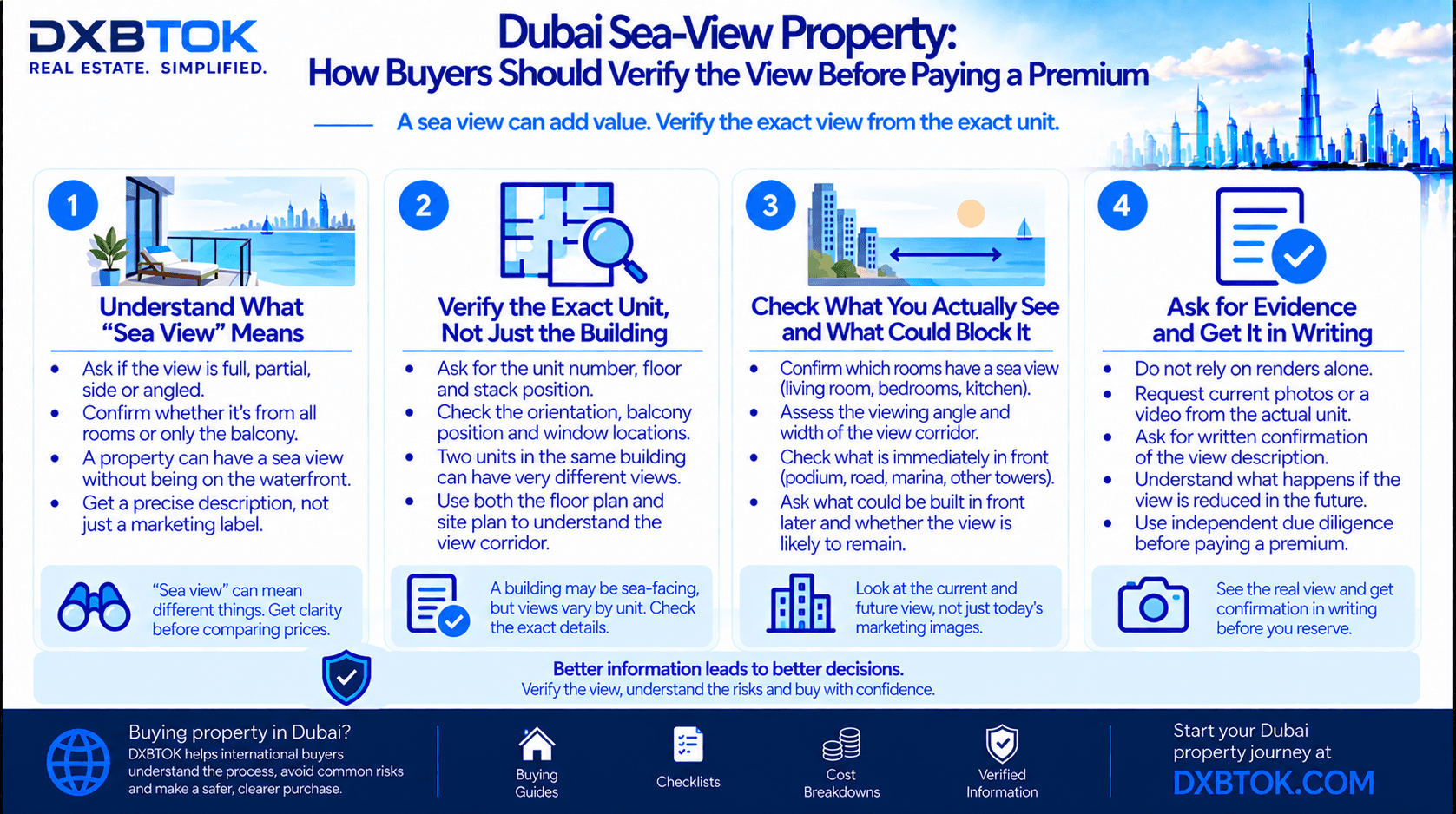
A Dubai property described as having a sea view should be assessed at the exact-unit level. Buyers should confirm which rooms see the water, whether the view is full or partial, the unit’s orientation and viewing angle, what sits in the foreground, whether nearby development could affect the outlook and how much extra they are paying compared with a similar non-view property.
Dubai Sea-View Property: How Buyers Should Verify the View Before Paying a Premium
A sea view can materially affect how a Dubai property feels, how it is marketed and how much a buyer is asked to pay.
But “sea view” is not a precise description on its own.
The view may be direct, partial, angled, visible only from a balcony, interrupted by another building or dependent on what is developed nearby in the future.
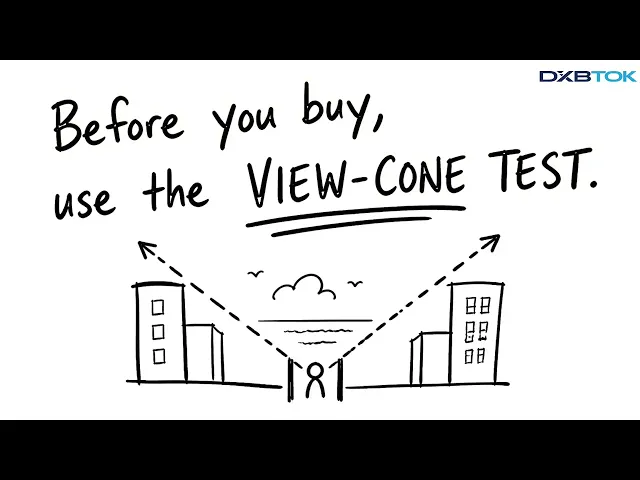
Before paying a premium for a sea-view property, verify the exact view from the exact unit rather than relying on the project name, tower location or marketing description.
1. Separate Sea View From Waterfront Property
A property can have a sea view without being directly on the waterfront, and a waterfront property can have units that do not face the water.
That distinction matters because the buying decision is different.
If your priority is the wider waterfront lifestyle, access, building position and surrounding environment, use our waterfront property buyer considerations.
If you are specifically being asked to pay more because an individual unit has a sea view, focus on the evidence for that exact unit.
2. Ask What “Sea View” Actually Means
Do not assume everyone is using the phrase in the same way.
Ask whether the unit has:
full frontal sea view
partial sea view
side sea view
angled sea view
sea view from only one room
sea view from the balcony but not from the main living area
a distant water view beyond other buildings
A precise description is more useful than a broad marketing label.
3. Verify the Exact Unit, Not the Building
A tower may be described as sea-facing even though views differ significantly by stack, floor and orientation.
Ask for the exact:
unit number
floor
stack or position in the building
orientation
balcony position
window locations
Two units in the same building can have very different water exposure.
4. Check Which Rooms Actually See the Sea
The value of the view depends partly on where you experience it.
Ask whether the sea is visible from:
the main living room
the dining area
the primary bedroom
secondary bedrooms
the kitchen
the balcony or terrace
A view available only from a corner of the balcony is different from a wide sea outlook from the main living space.
5. Review the Viewing Angle
Floor plans show room arrangement, but they do not always make the practical viewing angle obvious.
Ask how the windows and balcony face relative to the water.
For example, a unit may technically face toward the coast while the main glazing looks diagonally past another tower.
The more expensive the view premium, the more important it is to understand the actual angle rather than the general direction.
6. Check the Width of the View Corridor
A wide uninterrupted outlook and a narrow gap between buildings should not be treated as the same product.
Look at how much of the visible horizon is open.
Ask whether neighbouring towers, podiums, landscaping, future phases or other structures interrupt the view.
For a ready property, this is usually easiest to assess physically from the exact unit.
7. Do Not Rely on a Render Alone
Off-plan marketing images are useful for understanding the intended design, but buyers should separate illustration from confirmed unit-level facts.
If a rendering shows an uninterrupted sea view, ask what information supports that representation for the exact unit.
Our Dubai property marketing-claims guide explains how to distinguish attractive presentation from facts that still need verification.
8. Use the Floor Plan Together With the Site Plan
A floor plan tells you how the unit is arranged.
A site or masterplan helps you understand what sits in front of it.
Review both together.
For off-plan property, our off-plan project brochure guide explains how to extract unit, masterplan and specification information without treating every marketing element as final.
9. Check What Is Immediately in Front of the Unit
Do not look only toward the horizon.
Also check the near-field view.
Depending on the position, the unit may overlook:
a podium
a road
a beach club
a marina
a neighbouring roof
a construction site
another residential tower
A distant strip of sea may not compensate for an unattractive immediate foreground if the view is a major reason for the purchase.
10. Ask What Could Be Built in Front Later
A current view is not automatically a permanent view.
Where surrounding plots or future phases exist, ask what is currently planned around the property and what evidence is available.
Do not assume an empty plot, temporary road or low-rise site will remain unchanged.
If preserving the view is central to your decision, treat future obstruction risk as part of the purchase analysis.
11. Distinguish Confirmed Information From Sales Expectations
Ask which statements about the view are:
confirmed for the exact unit
based on current plans
indicative
subject to future development
If the sea view is part of the price justification, request important representations in writing where possible.
12. For Ready Property, Visit the Exact Unit
If the property is completed, the most useful evidence is the real view from the exact unit.
Stand in the main living area, bedrooms and balcony.
Check the view while seated as well as standing, because window sill height, balcony walls and furniture position can change how much of the sea is actually visible during normal use.
13. Remote Buyers Should Request Unit-Specific Video
If you cannot visit in person, ask for a current video recorded from the exact unit.
The video should show:
the unit number or enough evidence to identify the unit
the living room windows
the balcony
the view straight ahead
the view to the left and right
nearby buildings and plots
the relationship between the room and the water
A short clip aimed only at the best angle is less useful than a continuous walkthrough showing the full context.
14. Compare the Sea-View Unit With a Non-View Unit
Do not evaluate the premium in isolation.
Compare the sea-view option with a similar unit in the same project or nearby.
Try to keep the comparison as close as possible in:
size
layout
floor
condition
payment structure
handover status
This helps isolate how much of the price difference is really being attributed to the view.
15. Ask Whether the Premium Is for View, Floor or Both
A higher-floor sea-view unit may be more expensive for several reasons at once.
The premium may reflect:
the water outlook
higher floor position
greater privacy
less immediate obstruction
larger balcony
better internal layout
Separate these factors so you know what you are actually paying for.
16. Do Not Let the View Hide Weak Fundamentals
A strong view does not fix a poor layout, weak building quality, inconvenient location or excessive recurring costs.
The property still needs to work as a complete purchase.
Compare the area, building, exact unit and ownership practicality before allowing the view to dominate the decision.
Our Dubai property area-selection guide helps buyers compare the wider location factors separately from individual-unit features.
17. Check Balcony Usability
If most of the view is experienced from the balcony, check whether the balcony is genuinely usable.
Consider:
depth
shape
privacy
wind exposure
shade
nearby mechanical equipment
noise from roads, beach facilities or neighbouring buildings
A large visual opening does not automatically mean the outdoor space will work well in everyday use.
18. Consider Glare, Sun and Internal Comfort
Orientation can affect the experience of large sea-facing windows.
Ask how direct sunlight reaches the unit at different times of day and whether blinds, glazing or shading are relevant to comfort.
The point is not to avoid a particular orientation. It is to understand how the view and the internal living environment work together.
19. Check Privacy as Well as Openness
A sea-facing unit may still have neighbouring balconies or towers within view.
Check whether occupants can see directly into the living room, bedrooms or terrace.
A more open water outlook can improve privacy, but that should be confirmed from the exact position rather than assumed from the project description.
20. Think About the View From the Future Buyer’s Perspective
If you may sell later, consider whether the view is easy for another buyer to understand and value.
A direct, obvious outlook is easier to explain than a view that depends on standing in one corner or looking between buildings.
Our Dubai property resale considerations guide explains how future buyer demand, comparable competition and unit marketability should be considered before purchase.
21. Avoid Assuming a Sea View Guarantees Better Investment Performance
A sea view may make a property more desirable to some buyers or tenants, but that does not guarantee stronger resale, rental performance or capital appreciation.
The outcome still depends on factors such as entry price, supply, building quality, location, competition, recurring costs and future market conditions.
Pay for a view because the overall property and premium make sense to you, not because the label alone is assumed to produce a financial result.
22. Review Sea-View Claims More Carefully Off-Plan
With off-plan property, you cannot stand inside the finished unit before buying.
That makes the evidence trail more important.
Ask for:
exact unit and stack
floor plan
tower orientation
site plan
surrounding building positions
current project phases
view description in sales material
any written unit-specific confirmation available
The less direct evidence you have, the less you should rely on a premium based only on presentation.
23. Check Ready and Off-Plan Sea Views Differently
A ready property gives you physical evidence now.
An off-plan property requires you to combine plans, orientation, project information and written representations.
The question is therefore not simply whether the property is described as having a sea view.
The question is how confidently you can verify what the buyer will actually experience.
24. Use a Sea-View Verification Checklist
Exact unit: Am I reviewing the exact unit rather than a generic tower position?
View type: Is the view full, partial, side or angled?
Rooms: Which rooms actually see the sea?
Angle: Is the main glazing oriented toward the water?
Width: How broad is the visible water corridor?
Foreground: What sits directly in front of the unit?
Future development: Could nearby construction materially change the outlook?
Evidence: Do I have unit-specific plans, photos or video?
Premium: How much more am I paying compared with a similar non-view unit?
Fundamentals: Does the property still make sense without relying on the view alone?
Resale: Will the view be obvious and understandable to a future buyer?
Final Takeaway
A sea-view property should be assessed at unit level, not project level.
Confirm the exact orientation, floor, rooms, viewing angle, foreground, nearby development and evidence supporting the claim. Then compare the price premium with a similar non-view property.
The important question is not whether the marketing says “sea view.” It is what you can actually see from the exact unit, how reliable that view is, and whether the premium still makes sense once the rest of the property is considered.
Need help comparing Dubai properties with premium views? DXBTOK can help international buyers organise the key property, location and transaction information before moving forward.
Start your Dubai property review at DXBTOK.com.
Related DXBTOK guides
Waterfront Property in Dubai: Buyer Considerations →
How to Read Dubai Property Marketing Claims →
How to Read a Dubai Off-Plan Project Brochure →
Dubai Property Area Selection: How Buyers Should Compare Locations →
Dubai Property Resale: What Buyers Should Think About Before Buying →


