The Dubai property transfer is the formal registration stage of a completed-property sale. This guide explains what buyers should prepare before transfer day, how NOC and mortgage requirements can affect timing, how purchase funds and registration fees should be organised, what happens through the Real Estate Registration Trustee process and how ownership is formally recorded after completion.
Dubai Property Transfer Process Explained
For a completed Dubai property, the transfer is the formal stage where the sale is registered and ownership moves from the seller to the buyer.
It is not simply the moment when money changes hands.
A proper transfer requires the parties, property, documents, payment arrangements and registration details to be ready so the transaction can be completed through the relevant Dubai registration process.
For buyers, the practical goal is simple: understand what must be ready before transfer day, what happens during registration and what ownership evidence should follow afterward.
1. Separate the Transfer From the Earlier Buying Stages
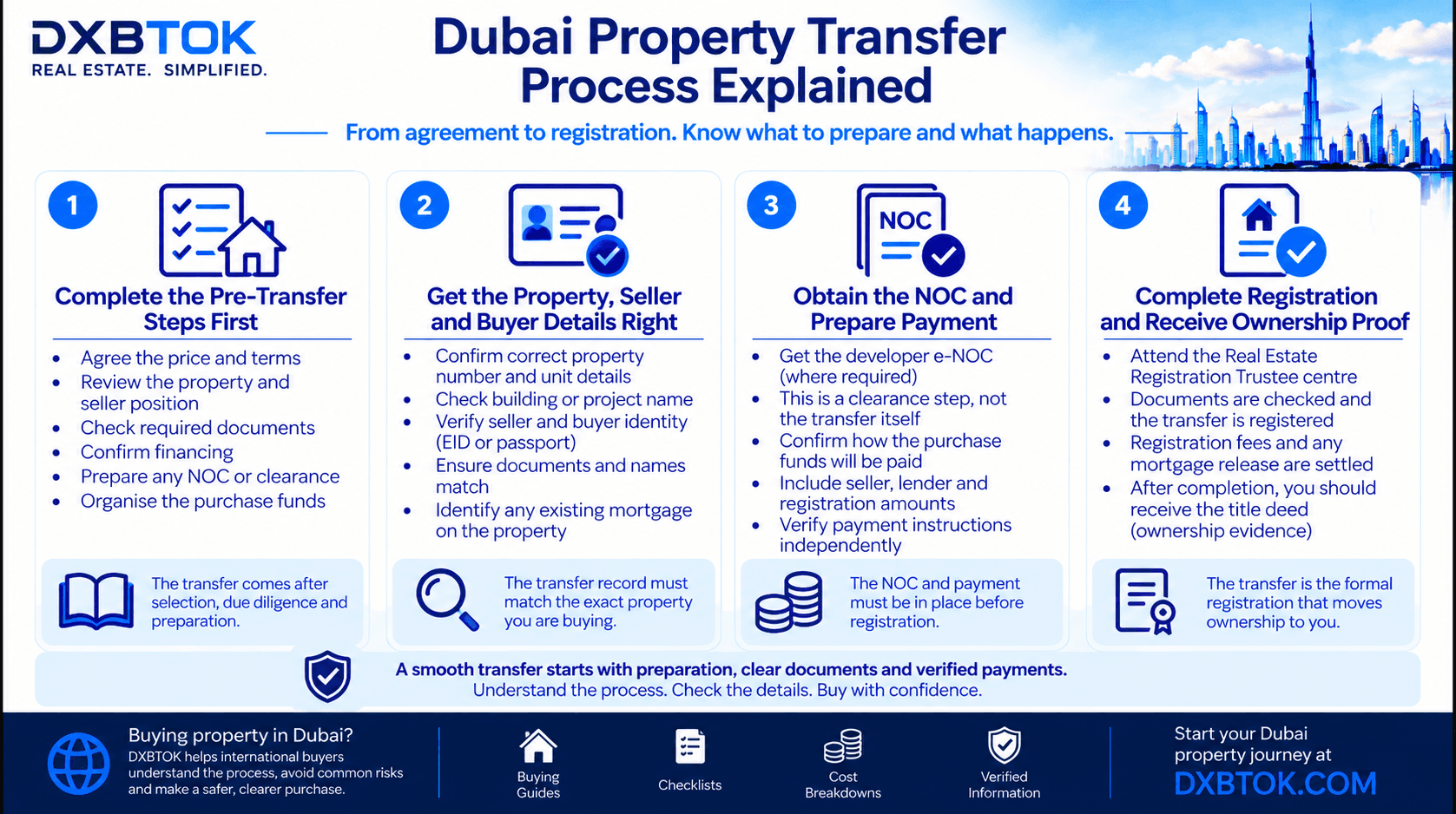
The transfer comes after earlier steps such as property selection, negotiation, due diligence and transaction preparation.
agreeing the commercial terms
reviewing the property and seller position
checking required documents
confirming financing
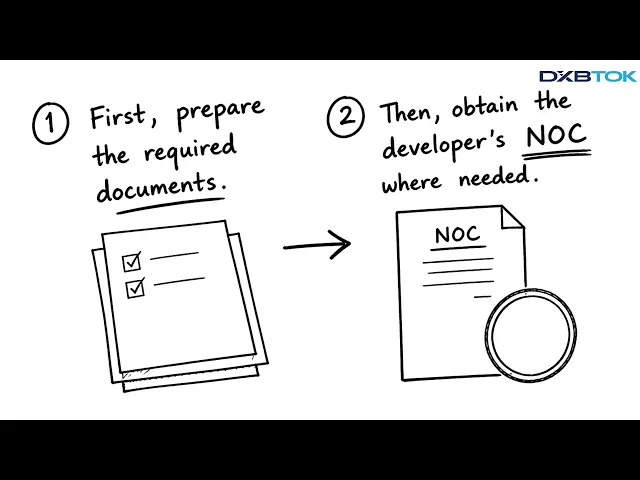
preparing any required clearance
organising the purchase funds
The wider sequence is explained in our Dubai property buying process guide.
2. Know Whether You Are Transferring a Completed Property
The standard completed-property transfer route is different from the initial registration of an off-plan purchase.
Dubai Land Department has separate processes for completed-property sale registration and initial off-plan sale registration.
If you are buying a ready or completed property from an existing owner, you should follow the transfer requirements that apply to that transaction.
3. Confirm the Seller and Buyer Details Before the Appointment
Identity and transaction details should be consistent before registration begins.
Depending on the buyer and seller, relevant identification may include Emirates ID or a valid passport for a non-resident foreign buyer.
Names, ownership details and supporting records should match the transaction documents.
Do not leave basic identity discrepancies to be resolved at the last minute.
4. Confirm That the Property Details Are Correct
Before transfer, confirm the exact asset being sold.
property number or unit details
building or project name
seller ownership details
agreed purchase price
any applicable mortgage position
any transfer-related restrictions that still need to be cleared
The transfer record should match the property the buyer actually agreed to purchase.
5. Understand the Role of the NOC Where Required
For many completed-property sales in Dubai freehold areas, the developer clearance stage is an important part of transfer preparation.
Dubai Land Department currently lists a developer e-NOC among the required documents for property sale registration in freehold areas.
For the NOC step itself, see our Dubai property NOC guide.
6. Do Not Confuse the NOC With the Transfer
The NOC is a clearance document.
The transfer is the registration event that changes the recorded ownership.
They are connected, but they are not the same step.
Completing the NOC stage does not by itself mean that ownership has already transferred to the buyer.
7. Confirm How the Purchase Funds Will Be Paid
The buyer should know exactly how the purchase money will be delivered before transfer day.
amount due to the seller
any amount due to a lender
registration-related amounts
the accepted payment method
who receives each payment
Payment instructions should be verified independently before money is released.
Use our Dubai property payment safety checklist for the wider payment-control process.
8. Mortgaged Property Requires Additional Coordination
If the seller’s property is mortgaged, the transfer can involve extra steps before ownership can move cleanly to the buyer.
Dubai Land Department has a separate process for registering the sale of a mortgaged property, including coordination around the bank’s outstanding amount and mortgage release.
Buyers should therefore identify the mortgage position early rather than discovering it at the final registration stage.
9. The Buyer’s Mortgage Can Also Affect Timing
If the buyer is using finance, lender requirements may need to be completed before transfer.
valuation
final approval
cash contribution
payment instruments
registration timing
Do not assume that mortgage approval alone means the property is automatically ready to transfer.
10. The Registration Trustee Handles the Formal Registration Step
Dubai Land Department’s current completed-property sale-registration process is carried out through Real Estate Registration Trustee centres.
The submitted documents are checked, transaction details are entered into the system and audited, the applicable fees are paid and the registered documents are issued electronically.
This is the point where the sale moves from a private agreement into formal registration.
11. Legal Representatives Can Act Where Properly Authorised
A buyer or seller may not always attend the relevant transaction step personally.
Where a representative is used, the authority must be suitable for the action being performed.
For the delegated-authority side, use our Dubai property power-of-attorney guide.
12. Do Not Assume a POA Automatically Covers Every Action
A representative can only act within the authority that has been validly granted and accepted for the relevant transaction step.
The scope should be checked before the transfer appointment.
If the buyer plans to complete remotely, this should be organised well in advance rather than treated as a last-minute workaround.
13. Registration Fees Should Be Prepared in Advance
Dubai Land Department currently lists sale-registration fees and additional issuance or service-partner charges for completed-property transfers.
The exact amount can depend on the transaction and service route.
Buyers should therefore confirm the current payable amounts before the appointment and avoid budgeting only for the seller payment.
14. The Transfer Appointment Is a Final Consistency Check
By the time the parties reach the registration stage, the transaction should already be internally consistent.
buyer identity
seller identity
property details
agreed price
required clearance
mortgage position
payment arrangements
supporting documents
If one of those elements is unresolved, the transfer may be delayed.
15. Ownership Evidence Follows Formal Registration
Once the completed-property sale is successfully registered, Dubai Land Department lists an electronic title deed among the issued documents.
For the ownership-record side, see our Dubai title deed and property ownership guide.
16. Do Not Treat Payment as Proof of Ownership
Paying the seller is not the same as completing the formal ownership registration.
commercial payment
transaction completion
formal registration
final ownership evidence
The strongest buyer position is when all four are aligned.
17. Transfer Is Not the Same as Handover
Transfer deals with formal ownership registration.
Handover deals with the practical transition into possession and use of the property.
Depending on the transaction, those moments may be closely connected, but they should not be treated as identical.
18. Prepare a Transfer File Before the Appointment
Before the scheduled transfer, organise a simple file containing the information relevant to the transaction.
buyer identification
seller identification
property details
sale agreement or transfer-related documents
NOC where applicable
mortgage or bank documents where applicable
payment instruments
representative documents where applicable
confirmation of current registration fees
The exact required set depends on the transaction, but the file should be checked before the parties attend the registration step.
19. Use a Final Transfer Checklist
Property: Is the exact unit and ownership record correct?
Seller: Is the seller entitled to transfer the property?
Buyer: Are the buyer’s identification details correct?
NOC: Is the required developer clearance complete where applicable?
Mortgage: Is any seller or buyer financing issue resolved?
Funds: Are the purchase funds and payment instruments ready?
Fees: Are the current registration and service charges confirmed?
Representation: If someone is acting under POA, is the authority suitable for the transfer step?
Registration: Is the appointment or approved transfer route confirmed?
Ownership evidence: Do you know what registered document should follow completion?
Final Takeaway
A Dubai property transfer is the formal registration stage of a completed-property sale.
The transaction is strongest when the property, parties, documents, clearance, financing, payments and registration details are already aligned before the final appointment.
Prepare the transaction properly before transfer day, verify the payment route, confirm any NOC or mortgage requirements and make sure formal registration results in the correct ownership record.
Need help organising the information around a Dubai property purchase? DXBTOK can help international buyers structure the key property and transaction details before moving forward.
Start your Dubai property review at DXBTOK.com.
Related DXBTOK guides
Dubai Property Buying Process Guide →
What Is a No Objection Certificate in Dubai Property? →
Power of Attorney for Dubai Property Buyers →