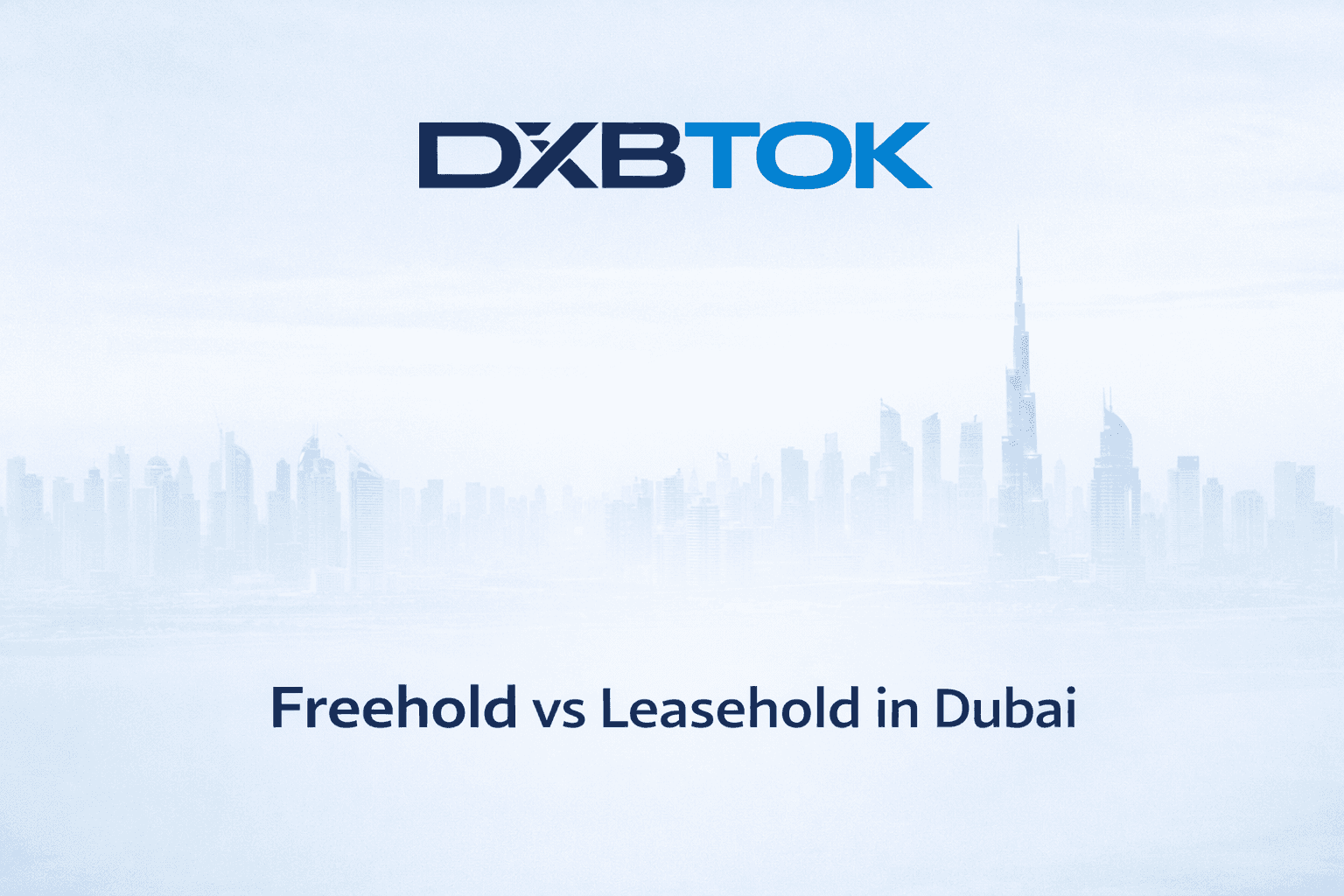
Freehold vs Leasehold in Dubai: What Buyers Need to Know Before Choosing
DXBTOK Research
Dubai Real Estate Research & Operations
Sep 12, 2025
Dubai offers different ownership structures, and buyers should understand them clearly before committing to a property. The most common comparison is freehold vs leasehold. While both can provide access to the Dubai property market, they are not the same in terms of ownership rights, control, and long-term value. This guide explains the practical difference, who each option may suit, and what buyers should review before making a decision. At DXBTOK, we treat ownership structure as a strategic foundation — because the right property is not only about location and price, but also about the rights attached to it.
Freehold vs Leasehold in Dubai: What Changes for the Buyer
When comparing properties in Dubai, many buyers focus first on location, layout, and price. But one of the most important factors sits deeper in the legal structure: the ownership type.
A property may look attractive on paper, but your long-term flexibility depends heavily on whether it is freehold or leasehold.
Understanding this difference early helps you avoid confusion later — especially when planning resale, rental use, or family ownership.
What Freehold Ownership Means
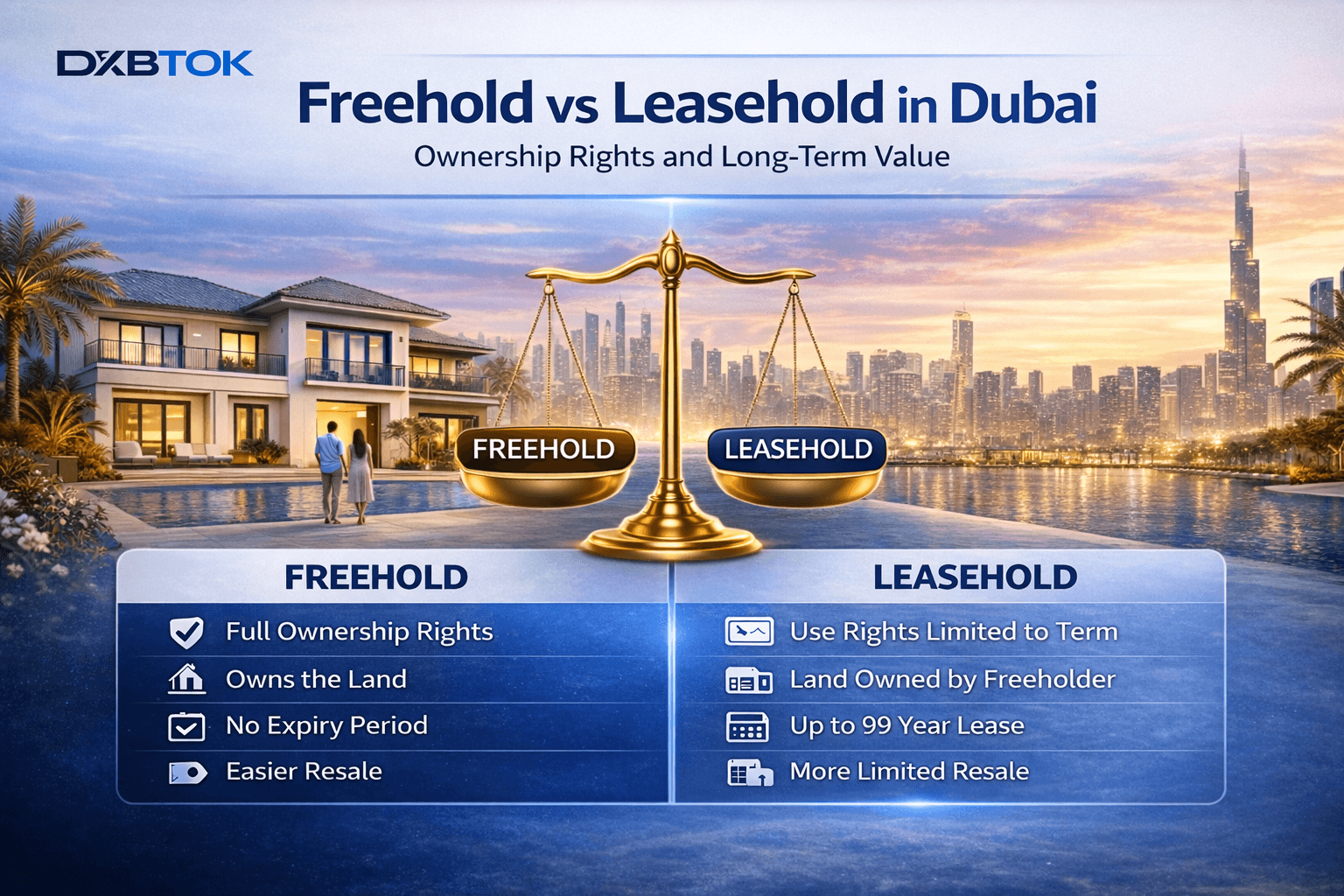
Freehold ownership gives the buyer full ownership rights over the property, and in applicable cases, the land connected to it, subject to local rules and building regulations.
In practical terms, this usually means the owner can:
Occupy the property
Lease it out
Sell it
Transfer ownership
Hold it long term without a fixed expiry period
For many buyers and long-term investors, freehold is the preferred route because it offers stronger control and long-duration ownership rights.
What Leasehold Ownership Means
Leasehold ownership gives the buyer the right to use the property for a fixed term, often up to 99 years (depending on the agreement and area).
With leasehold:
The land remains owned by the freeholder
The buyer holds use/occupancy rights for the lease period
Certain conditions or restrictions may apply
Ownership is time-bound rather than permanent
Leasehold can still be a valid option in some cases, especially for buyers with a specific budget or use case, but it requires careful review of the lease terms and long-term implications.
Why Many Buyers Prefer Freehold
Freehold properties are generally more attractive to many buyers because they offer:
Full ownership rights
More control over the asset
Stronger resale positioning
Long-term security
Greater flexibility for rental and exit strategies
For buyers who want long-term asset stability, family planning, or clearer resale options, freehold often aligns better with those goals.
Why Some Buyers Still Consider Leasehold
Leasehold properties may sometimes offer:
Lower entry pricing in certain cases
Access to locations or properties that fit a specific budget
A practical option for time-limited occupancy plans
That said, lower entry cost should not be the only decision factor. Buyers should always compare the ownership term, restrictions, renewal conditions (if applicable), and future resale practicality.
What to Check Before Choosing
Before deciding between freehold and leasehold, review the property with a strategy-first mindset:
Your timeline: short-term use or long-term hold?
Your purpose: self-use, rental income, or resale?
Your control needs: flexibility to lease/sell/transfer
Your budget: entry cost vs long-term value
Your risk tolerance: comfort with time-limited ownership terms
The right choice depends on your actual goals — not just the listing headline.
Common Buyer Mistake to Avoid
A common mistake is comparing two properties only by price, while ignoring the ownership structure. A cheaper option can appear attractive at first, but if the ownership rights are more limited, the long-term value equation may change.
This is why ownership type should be reviewed early — before final negotiations and paperwork.
Choosing between freehold and leasehold is not just a legal checkbox — it directly affects control, flexibility, and long-term property strategy. At DXBTOK, we help buyers compare ownership type alongside practical factors like rental use, resale positioning, and overall cost structure, so the final decision is based on clarity and fit, not just marketing language or entry price.
Dubai offers strong opportunities, but the best decisions usually come from understanding the structure behind the property — not only the surface presentation. Taking time to review ownership rights, restrictions, and long-term implications can help buyers move forward with more confidence and fewer surprises..
With the right guidance from experienced professionals like DXBTOK, choosing between freehold and leasehold becomes a clearer strategy decision — helping you avoid unnecessary surprises and focus on what fits your goals best.