How to Choose the Right Property Type in Dubai

DXBTOK Research
Dubai Real Estate Research & Operations
Sep 11, 2025
Dubai offers a wide range of property types, and each one serves a different purpose depending on your budget, target tenant profile, and ownership goals. Some buyers prioritize accessible entry points and flexible rental demand, while others focus on family-oriented locations or premium positioning. This guide explains the main property types in Dubai, what they are generally used for, and how to evaluate them in a practical way before moving forward. The goal is simple: help you choose a property type that matches your plan instead of following hype.
Why property type matters first
Before looking at finishes, views, or amenities, it helps to decide what type of property fits your strategy. Property type affects:
Budget range
Tenant demand profile
Maintenance needs
Vacancy risk
Rental format suitability (short-term vs long-term)
Resale audience later on
A good match between property type and your intended use can make the entire process easier to manage.
1) Apartments
Apartments are often the most accessible entry point for buyers in Dubai and are commonly used in both short-term and long-term rental strategy.
Why many buyers start with apartments
Lower entry cost compared with many villas
Larger supply across multiple areas
Strong demand from professionals, couples, and smaller households
Easier to compare similar units in the same building or area
What to check carefully
Service charges
Building quality and maintenance
Developer/reputation
Unit layout efficiency (usable space matters)
Community demand (not just tower marketing)
Apartments can work well when the goal is flexibility and broader tenant appeal, but the exact building and location matter a lot.
2) Villas
Villas usually attract families or tenants looking for more space, privacy, and community living.
Common strengths
Larger layouts and outdoor space
Strong appeal for family tenants
Potentially longer stay duration
Lifestyle-driven demand in established communities
Things to consider
Higher purchase budget
Higher upkeep and maintenance exposure
Community fees and property condition
Tenant turnover may be lower, but vacancy periods can be more expensive if the property sits empty
Villas can be a strong option for buyers targeting family-led demand, especially in areas with schools, parks, and established infrastructure.
3) Townhouses
Townhouses sit between apartments and villas in many cases and can offer a balanced option for buyers who want family demand without moving fully into villa pricing.
Why townhouses are popular
Family-friendly format
More space than apartments
Often lower entry point than standalone villas (depending on area/project)
Strong demand in master communities
Watch-outs
Community rules and fees
Layout practicality across floors
Parking and access
Build quality in newer projects
Townhouses are often chosen by buyers who want a practical, family-oriented product with broad appeal in suburban-style communities.
4) Branded residences
Branded residences are usually positioned as premium products with hospitality-style services, branded management, or luxury positioning.
What attracts buyers
Premium brand association
Strong design and amenities
High-end tenant/user appeal
Differentiation in the market
Important reality check
Branded residences may come with:
Higher purchase prices
Higher ongoing costs/fees
More brand-driven pricing premiums
They can be attractive for certain buyer profiles, but should be evaluated based on actual numbers, fees, and market demand — not branding alone.
How to choose based on your strategy
The “best” property type depends on your plan, not a generic ranking.
If your priority is budget accessibility
Apartments are often the first category buyers compare.
If your priority is family tenant demand
Townhouses and villas usually become stronger candidates.
If your priority is premium positioning
Branded residences may be worth reviewing — with extra attention to cost structure and long-term demand.
Practical checklist before choosing a property type
Use this quick filter before narrowing down listings:
Budget range: What is your realistic all-in purchase budget?
Tenant profile: Professional, couple, family, executive, holiday-user?
Rental strategy: Long-term, short-term, or flexible?
Holding plan: Short-term flip, medium-term hold, long-term hold?
Management effort: How hands-on do you want to be?
Community fit: Schools, transport, lifestyle, business hubs, tourism zones?
Cost structure: Service charges, maintenance, furnishing, upgrades
This helps avoid choosing a property type first and only later discovering it does not match your actual plan.
Common mistake to avoid
A common mistake is choosing based on visual appeal alone (or social media hype) without defining:
who the property is for,
how it will be used,
and what ongoing costs come with that property type.
A smaller, well-matched unit in the right category can outperform a more impressive-looking option that does not fit your target demand.
Final takeaway
Dubai offers excellent variety across apartments, villas, townhouses, and branded residences — but each type serves a different purpose. Start with your budget, tenant profile, and rental strategy, then choose the property type that fits those goals.
Clarity first, property second. That approach usually leads to better decisions than chasing trends.
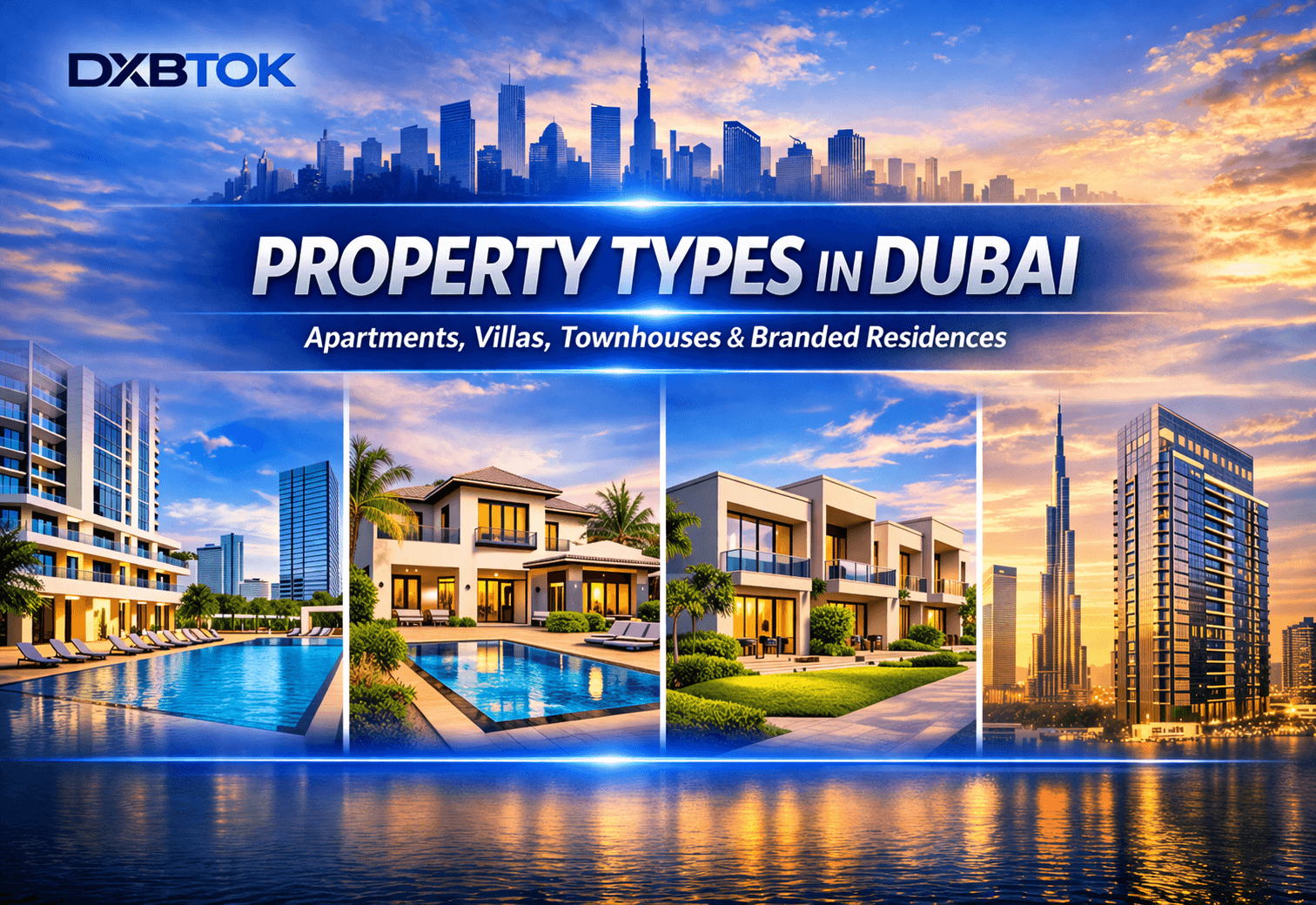
Choosing the right property type is not about what looks best in a brochure — it is about what fits your budget, target tenant profile, and ownership plan. In Dubai, apartments, villas, townhouses, and branded residences can all behave differently depending on location, cost structure, and how the property will be used. At DXBTOK, we treat this step as a strategy decision first: comparing property type, demand profile, and practical ownership costs before focusing on presentation.
This helps buyers move forward with more clarity, reduce avoidable mistakes, and choose a property route that matches their real goals — not just market noise.